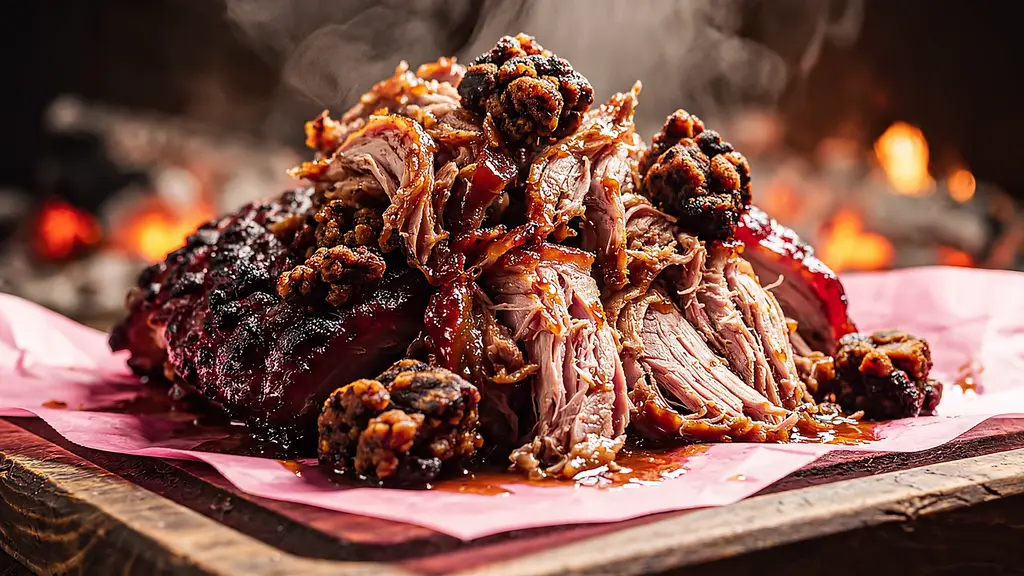
Recipe at a glance
- Makes
- About 4 lb. of pulled pork, 12–16 sandwiches
- Prep
- 30 min
- Cook, roughly
- 12 hr
Ingredients
- 1 bone-in pork shoulder (Boston butt), 7–9 lb.
- 2 tbsp. yellow mustard or a thin film of oil (optional binder)
- 3 tbsp. coarse kosher salt
- 3 tbsp. coarse black pepper
- 2 tbsp. paprika
- 2 tbsp. brown sugar
- 1 tbsp. garlic powder
- 1 tsp. cayenne (optional)
- Charcoal or wood, plus 3–4 fist-sized chunks of hardwood such as hickory, oak or apple
- Pink butcher paper or heavy-duty foil for wrapping
Method
- Trim and season. The night before, trim loose flaps and any fat cap thicker than about ¼ in. Coat with the binder if using, season all sides with the rub, and refrigerate uncovered overnight.
- Light the smoker. Bring the smoker to 225°F–275°F and let it settle for 30 minutes, until the smoke runs thin and pale blue.
- Smoke. Put the shoulder on fat side toward the heat source. Leave the lid shut. Expect roughly 1.5–2 hours per pound.
- Wrap through the stall. When the internal temperature stalls in the 150s or 160s and the bark is dark and set, wrap tightly in butcher paper or foil and return it to the smoker.
- Cook to tender. Cook until the internal temperature reaches about 195°F–205°F and a probe slides in with almost no resistance.
- Rest and pull. Rest wrapped for at least an hour, then pull out the blade bone, shred the meat, and fold in the bark and any collected juices.
Pork shoulder is the best first long cook. It is cheap, it forgives mistakes, and it tells you plainly when it is done. This guide plans the cook across a weekend so dinner lands on Saturday evening instead of at midnight.
What to buy
Ask for a bone-in Boston butt, the upper part of the pork shoulder. A 7–9 lb. shoulder is the useful size: big enough to hold moisture over a long cook, small enough to finish in a day. Look for even marbling and a fat cap that is not thicker than ½ in.
Plan on losing about half the raw weight to fat, water and bone. An 8 lb. shoulder gives roughly 4 lb. of pulled pork, enough for 12–16 sandwiches.
Friday night: trim and season
- Trim. Take off loose flaps that will burn, and thin any fat cap thicker than about ¼ in. You want rub touching meat on as much of the surface as possible, because that is where bark forms.
- Bind (optional). A thin film of yellow mustard or oil helps rub stick. It does not flavor the finished meat much.
- Season. Mix the salt, pepper, paprika, sugar, garlic and cayenne. Season every side generously. You will use most of it, which works out to about 1 tsp. of coarse kosher salt per pound of meat. If you only have fine table salt, use about half as much.
- Rest it cold. Set the shoulder on a rack over a tray and refrigerate it uncovered overnight. The salt has time to work in and the surface dries a little, which helps bark.
Keep raw pork at 40°F or below until it goes on the smoker, and keep it away from ready-to-eat food in the fridge.
Saturday: the cook
A realistic timeline for an 8 lb. shoulder at 250°F, aiming to eat at 7 pm:
| Time | What happens |
|---|---|
| 5:00 am | Light the smoker. Let it settle at 225°F–275°F. |
| 5:45 am | Shoulder on. Close the lid and leave it alone. |
| 11:00 am to 1:00 pm | The stall. Internal temperature parks in the 150s or 160s. |
| Around 1:00 pm | Bark is set. Wrap and return it to the smoker. |
| 4:00 to 5:30 pm | Probe tender, around 195°F–205°F. Pull it off. |
| 5:30 to 6:30 pm | Rest, still wrapped. |
| 6:30 pm | Pull the pork and serve. |
Treat the clock as a forecast, not a promise. The rule of thumb is 1.5–2 hours per pound at 225°F–250°F, less if you run hotter. Start early: a finished shoulder holds happily for hours, but an unfinished one cannot be hurried at the end without cost.
Fire and smoke
Aim for a steady pit temperature anywhere from 225°F–275°F. Steady matters more than the exact number. Add two or three chunks of hardwood at the start; most of the smoke flavor goes in during the first few hours, while the surface is still cool and moist.
Look for thin, pale blue smoke. Thick white smoke means the fire is smoldering and will make the meat taste bitter. If that happens, open the intake a little and give the fire air. Our fire management basics piece covers this in detail.
Put the shoulder fat side toward the heat source, so the fat takes the brunt of it. Then keep the lid closed. Every look costs heat and time.
The stall
Somewhere in the 150s or 160s the internal temperature will stop climbing, sometimes for hours. This is evaporative cooling: moisture moving to the surface and evaporating takes heat away as fast as the smoker adds it. Nothing is wrong. You have two choices:
- Ride it out. Leave the shoulder alone. The bark gets thicker and the cook takes longer.
- Wrap it. Once the bark is dark and does not smear when you touch it, wrap the shoulder tightly in pink butcher paper or heavy-duty foil and put it back on. Our stall guide walks through the wrap. Foil pushes through the stall fastest but softens the bark. Paper is a middle path.
How to know it is done
Safety and doneness are two different numbers here. USDA’s safe minimum for whole cuts of pork is 145°F with a three-minute rest, and your shoulder passes that hours before it is ready. What you are waiting for is the connective tissue to break down so the meat pulls apart.
That happens at roughly 195°F–205°F. The real test is feel: a probe or skewer should slide into the thickest part with almost no resistance, like pushing into soft butter, and the blade bone should wiggle loose. Check in a few spots, away from the bone. See our safe versus done temperature guide for why the numbers differ.
Rest, pull and serve
Rest the shoulder, still wrapped, for at least an hour. The meat finishes relaxing and the juices settle, and it will still be too hot to handle bare-handed. If dinner is later than planned, wrap it in towels inside a dry cooler. For long holds, keep the meat at 140°F or above; a probe thermometer left in the meat takes the guessing out of it.
To pull: slide out the blade bone, pull the meat into chunks with forks or gloved hands, and remove any large pockets of fat. Mix the dark bark through the lighter interior so everyone gets some, and pour any collected juice back over. Season with a little more salt if it needs it, and serve sauce on the side.
Leftovers
Pulled pork keeps well if you handle it promptly:
- Refrigerate leftovers within two hours of coming off the heat, or within one hour if it is above 90°F outside. Shallow containers cool faster.
- Eat refrigerated leftovers within three to four days, or freeze them.
- Reheat to 165°F. A splash of the saved juices, a covered pan and gentle heat keep it moist.
Quick reference
- Pit: 225°F–275°F, thin blue smoke.
- Time: about 1.5–2 hours per pound at 225°F–250°F.
- Safe: 145°F plus a three-minute rest (USDA, whole cuts of pork).
- Done for pulling: about 195°F–205°F, probe tender.
- Rest: at least an hour, wrapped. Hold at 140°F or above.
- Leftovers: in the fridge within two hours, reheat to 165°F.