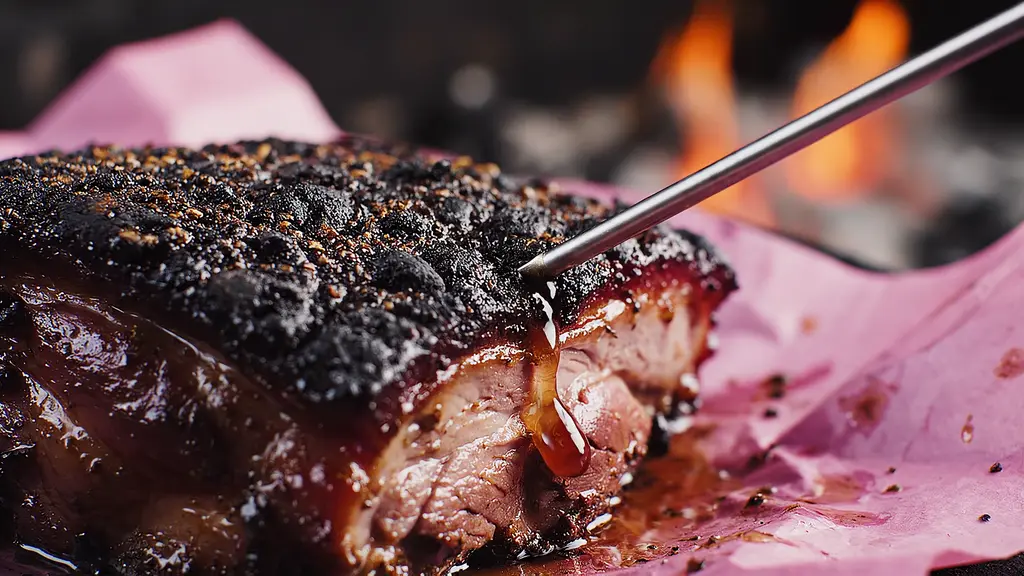
Every barbecue cook has two target temperatures, and mixing them up causes most of the confusion around “when is it done?”
- Safe is the internal temperature at which the meat has been cooked enough to be safe to eat. The USDA publishes these numbers.
- Done is the temperature at which the meat has the texture you want. For tough, collagen-rich barbecue cuts that is far above the safe number.
A pork shoulder is safe to eat at 145°F. It will not pull apart until it is around 200°F. Both statements are true.
USDA safe minimum internal temperatures
These are the USDA Food Safety and Inspection Service minimums, measured with a food thermometer in the thickest part of the food.
| Food | Safe minimum |
|---|---|
| Beef, pork, veal and lamb steaks, chops and roasts | 145°F, then rest at least 3 minutes |
| Ground beef, pork, veal and lamb | 160°F |
| Poultry: whole, pieces and ground | 165°F |
| Fish and shellfish | 145°F |
| Fresh (raw) ham | 145°F, then rest at least 3 minutes |
| Leftovers and casseroles | 165°F |
Check the USDA chart linked below for the full list, including precooked ham and egg dishes.
Why barbecue goes so far past “safe”
Brisket, pork shoulder and ribs are working muscles full of connective tissue. Cooked only to 145°F they are safe but tough and chewy. Held at higher temperatures for hours, that collagen breaks down into gelatin, which is what makes barbecue tender and moist.
Typical doneness ranges cooks aim for (texture targets, not safety rules):
| Cut | Usually done around | The real test |
|---|---|---|
| Pork shoulder, for pulling | 195°F–205°F | Probe slides in like butter; bone wiggles loose |
| Beef brisket | 195°F–205°F | Probe tender through the thickest part of the flat |
| Pork ribs | 195°F–203°F between the bones | Rack bends and the surface cracks when lifted |
| Chicken thighs | 175°F–185°F | Juices run clear, meat pulls from the bone |
| Chicken breast | 165°F | Stop here; it dries out quickly above this |
Treat these as a range to start checking, not a finish line. Two shoulders of the same weight can be ready 20°F apart. Feel beats numbers once you are past the safe point.
Using a thermometer properly
- Probe the thickest part, away from bone, fat seams and gristle, which all read differently from the meat around them.
- Check more than one spot on large cuts. The coolest reading is the one that counts for safety.
- Leave-in probes let you watch the cook without opening the lid. An instant-read thermometer is best for confirming at the end.
- Check calibration now and then: a thermometer in a glass packed with ice and a little water should read 32°F.
Keeping food out of the danger zone
Bacteria grow fastest between 40°F and 140°F. A few habits keep cooked and raw food out of that range:
- Keep raw meat refrigerated at 40°F or below until it goes on the heat.
- Hold cooked food you are not serving right away at 140°F or above.
- Refrigerate leftovers within two hours, or within one hour when it is above 90°F outside.
- Reheat leftovers to 165°F.
- Use a clean platter and utensils for cooked meat. Never put it back on the plate that held it raw.
Quick reference
- Safe is a USDA number. Done is a texture.
- Whole cuts of pork and beef: 145°F plus a 3-minute rest. Ground meat: 160°F. Poultry: 165°F.
- Collagen-rich cuts get tender around 195°F–205°F.
- Danger zone: 40°F–140°F. Two-hour rule for leftovers.