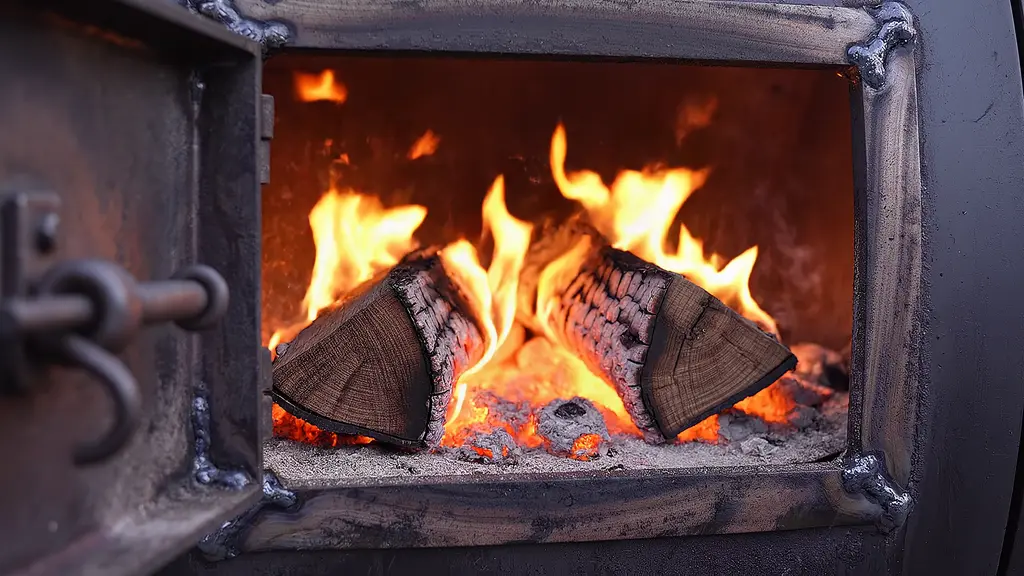
Most barbecue problems are fire problems. Dry meat, bitter bark and cooks that run hours late usually trace back to a fire that was too big, too small, or starved of air. The good news is that every smoker works on the same principle, and once you understand it the equipment matters much less.
Air is the throttle
A fire needs fuel, heat and oxygen. On a smoker you have already supplied the fuel, so airflow is how you control temperature.
- The intake (the bottom vent, or the firebox door on an offset) decides how much oxygen reaches the fire. More air, hotter fire. This is your main control.
- The exhaust (the top vent or chimney) lets combustion gases and smoke leave. Keep it mostly or fully open. Choking the exhaust traps stale smoke around the meat and can leave a sooty, bitter taste.
Make small changes to the intake and then wait. A charcoal fire takes 10–15 minutes to show the effect of a vent adjustment. Chasing the thermometer with big, frequent swings is the most common way to end up with a temperature that see-saws all afternoon.
Read the smoke
The color of the smoke tells you how well the fire is burning.
- Thin, pale blue, almost invisible: clean combustion. This is what you want for the whole cook.
- Thick, white, billowing: the fire is smoldering, usually from too little air or wood that is not burning cleanly. It deposits bitter compounds on the meat. Open the intake, and on an offset make sure the wood is catching rather than sitting on a dying bed of coals.
- Gray or black: something is burning that should not be, such as grease or wet wood. Find it and deal with it.
White smoke for a few minutes after adding wood is normal. White smoke that does not clear is a problem.
Fuel: charcoal and wood
Lump charcoal lights fast, burns hot and leaves little ash, but the pieces are irregular so it can burn unevenly. Briquettes are uniform and burn steadily for longer, which makes long cooks easier to hold. Both work. Pick one and learn how it behaves in your cooker.
Wood supplies flavor on a charcoal smoker and both heat and flavor on an offset.
- Use seasoned hardwood: oak, hickory, pecan, cherry, apple, maple. Seasoned wood is dry, often has cracks on the end grain, and sounds hollow when two pieces knock together.
- Avoid softwoods like pine, and never burn treated, painted, stained or pallet wood.
- On charcoal smokers, a few fist-sized chunks are plenty. Chips burn up quickly and are better suited to short cooks.
- On an offset, use splits about the length of your forearm, and warm the next split on top of the firebox so it catches instead of smoldering.
Lighting without lighter fluid
A chimney starter lights charcoal with a sheet or two of newspaper or a paraffin fire starter, and leaves no chemical taste. Coals are ready when the top layer is covered in a thin gray ash.
For long, low cooks you rarely need a full chimney. Two common approaches:
- Minion method: fill the charcoal basket with unlit charcoal and pour a small amount of lit coals on top. The fire spreads slowly through the unlit fuel for hours. Tuck wood chunks into the unlit charcoal so they catch in sequence.
- Snake method (kettle grills): arrange a two-by-two row of briquettes in a C shape around the edge of the kettle, place wood chunks along it, and light one end. The fire burns along the snake for many hours, with the meat on the opposite side over a water pan.
Holding a steady temperature
- Preheat properly. Let the cooker settle at your target for 20–30 minutes before the meat goes on. A cold smoker body soaks up heat and throws your first adjustments off.
- Build the fire smaller than you think. It is much easier to bring a fire up than to bring one down. On charcoal smokers, close the intake part-way before you reach the target and let the temperature coast up to it.
- Measure at the grate. Lid-mounted thermometers can read very differently from the grate where the food sits. A leave-in probe clipped at grate level tells you what the meat actually feels.
- Keep the lid closed. Every opening dumps heat and adds a burst of oxygen that flares the fire.
- Feed an offset little and often. A small, hot, clean fire fed a split every 30–60 minutes beats a big fire that swings from blazing to smoldering.
- Expect weather. Wind and cold both pull heat out of a cooker. Shield the smoker from wind and plan on burning more fuel on cold days.
Safety
- Never use a charcoal grill or smoker indoors, in a garage, a tent or any enclosed space, even with a door open. Burning charcoal produces carbon monoxide, which has no smell and can kill.
- Set up on a stable, non-flammable surface, well clear of the house, overhangs, fences and dry grass.
- Keep children and pets away from the cooker and the chimney starter.
- Ashes can stay hot enough to start a fire for a long time after they look dead. Let them cool completely, then store them in a lidded metal container away from anything that burns.
Quick reference
- Intake controls heat. Exhaust stays mostly open.
- Adjust in small steps, then wait 10–15 minutes.
- Thin blue smoke is good. Lingering thick white smoke is not.
- Seasoned hardwood only. No treated or softwood.
- Measure temperature at the grate, not the lid.