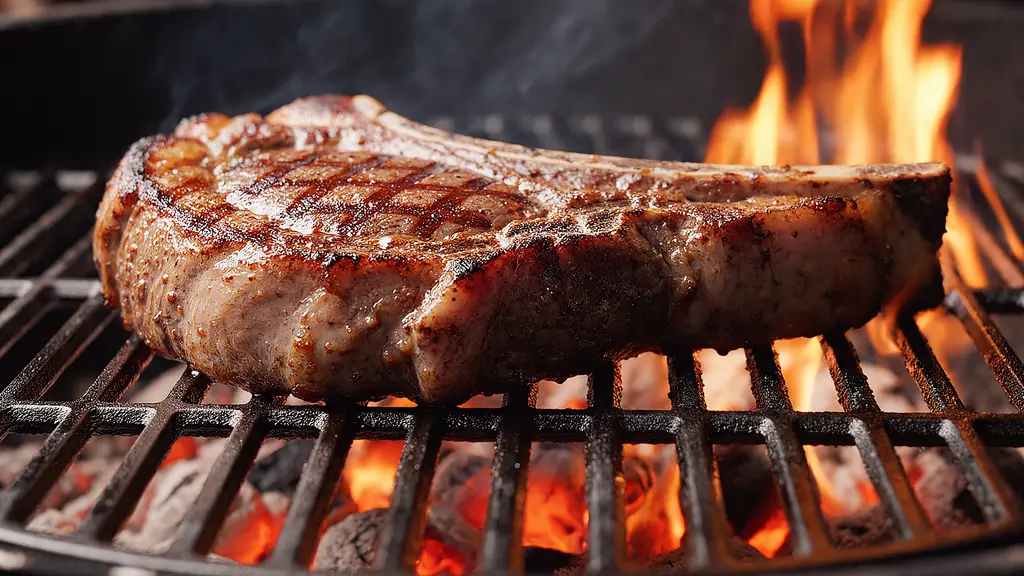
Recipe at a glance
- Makes
- 1 thick steak, 2–3 servings
- Prep
- 10 min
- Cook, roughly
- 1 hr
Ingredients
- One 1½–2 in. ribeye, New York strip, or similarly thick whole-muscle steak
- Kosher salt
- Freshly ground black pepper
- Optional: 1 small chunk of oak or pecan for charcoal-grill smoke
Method
- Dry-brine. Salt the steak evenly and refrigerate it on a rack, uncovered, for 8–24 hours at 40°F or colder. Pat the surface dry before cooking.
- Prepare the grill. Set up a two-zone fire with the indirect side at about 225°F–275°F. Aim for stable heat rather than a perfect digital reading.
- Cook gently. Place the steak away from the fire, close the lid, and monitor the thickest center, away from bone or a large fat seam. Flip once if one side heats faster.
- Prepare the sear. When the center is roughly 10°F–15°F below your finishing target, move the steak off the heat while you bring the direct side to high heat.
- Sear and verify. Sear in short bursts, turning frequently. Reach at least 145°F in the thickest part before removing the steak from the heat, then rest for at least 3 minutes.
- Serve. Slice against the grain. Use the thermometer reading, not the color of the center, to make your safety decision.
For steaks at least 1½ in. thick, the reverse sear is an effective way to combine an evenly cooked center with a deeply browned crust. The method is simple: start over gentle, indirect heat and finish with a short, aggressive sear.
A reverse sear is not a promise of a specific color or cooking time. Steak thickness, surface moisture, bone placement, and grate heat all matter.
Why it works
At moderate heat, the center warms more gradually than it does over a roaring fire. Meanwhile, the exterior has time to dry. A dry surface browns efficiently during the final sear because less heat is spent evaporating water. That browning is largely the Maillard reaction, not simply “sealing in juices.”
Equipment
- A grill set up for two-zone heat
- Clean grates and long-handled tongs
- A dependable instant-read thermometer (see our thermometer guide)
If you add a chunk of wood for smoke on a charcoal grill, use it according to the grill manufacturer’s directions.
The method in detail
Dry-brining for 8–24 hours seasons the steak through and dries the surface, which is what lets the final sear brown quickly. Keep the steak refrigerated at 40°F or colder the whole time.
The gentle stage is where most of the cooking happens. Run the indirect side at about 225°F–275°F and leave the lid closed. Monitor the thickest center, away from bone or a large fat seam, and flip once if one side is heating faster.
The handoff comes when the center is roughly 10°F–15°F below your finishing target. Move the steak off the heat briefly while you bring the direct side up to high heat. That offset is a starting estimate; thicker steaks and hotter grates can gain more temperature during the sear.
The sear should be short bursts with frequent turning, so the crust browns without scorching. Check the thickest part again with a clean instant-read thermometer. For the USDA-recommended minimum, reach 145°F before removing the steak from heat, then rest it for at least 3 minutes.
Temperature guide
| Stage | What to watch |
|---|---|
| Indirect cook | Gradual temperature rise; dry surface; controlled smoke |
| Sear | Fast browning, with frequent turning and measurement |
| USDA minimum for whole-muscle beef | 145°F before removal, followed by a 3-minute rest |
Some steak enthusiasts prefer rare or medium-rare results below 145°F. Those temperatures do not meet USDA’s recommended minimum, and choosing high-quality beef or keeping it chilled does not remove the additional food-safety risk. This guide uses the USDA minimum as its safe endpoint.
Troubleshooting
- Gray band around the edge: The direct side was too hot for too long. Shorten the sear and turn more often.
- Weak crust: Dry the steak thoroughly and let the grates preheat fully.
- Uneven finish: Check several points in the thickest section. Bones and large fat seams can create uneven readings.