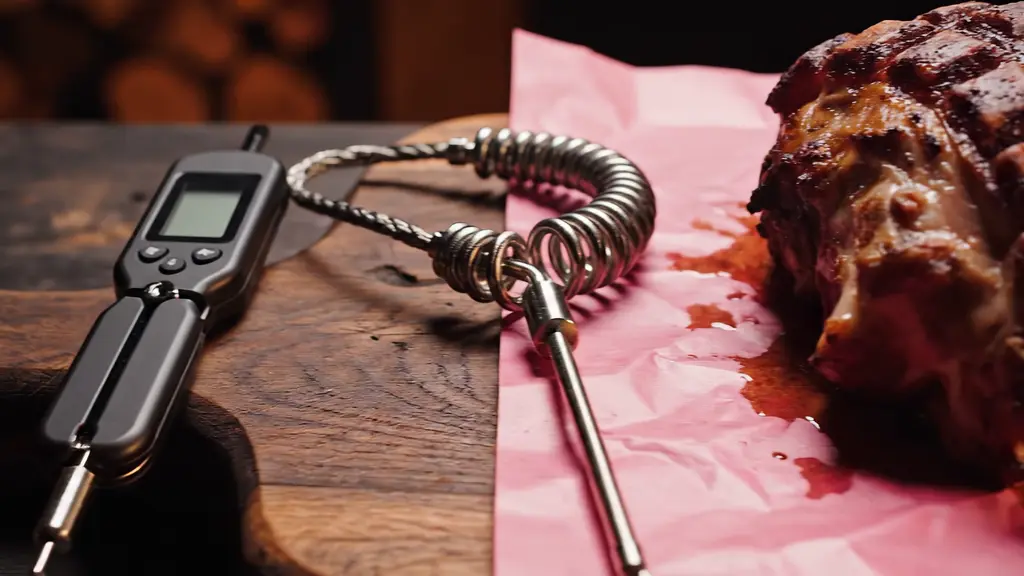
The best grill accessory is the one that tells you when dinner is actually done. A good thermometer prevents undercooked chicken, dried-out pork chops, and unnecessary guessing during a long smoke.
For most backyard cooks, the ideal setup is one instant-read thermometer and one leave-in monitor. They answer different questions.
Instant-read: Check doneness now
An instant-read thermometer gives you a quick spot measurement. Use it to:
- Check burgers, steak, pork chops, and chicken in the thickest section.
- Verify several points across a brisket or uneven roast.
- Confirm that previously cooked leftovers reach 165°F when reheated.
- Test a leave-in probe reading before removing meat from the grill.
Insert the sensing tip into the center, avoiding bone, thick fat seams, and the grate. In a thin burger, insert from the side. Read speed and accuracy vary by model, so don’t assume every device responds in one second.


Leave-in: Watch the cook change over time
A leave-in system uses probes designed to stay in food while it cooks. Some have a wired transmitter; others use wireless sensors. Many systems also support a separate pit probe, clipped near grate level to measure smoker or grill air temperature.
Use it to:
- Follow a brisket or pork shoulder through the stall.
- See if the pit drops when wind or fuel changes.
- Set alerts for unusual temperature swings.
- Reduce unnecessary lid openings during long cooks.
Important: Not all “wireless” probes are suitable for direct flame or high-temperature searing. Check the probe’s maximum ambient and internal ratings. Protect cables from hot grates and burning coals.

Comparison
| Feature | Instant-read | Leave-in monitor |
|---|---|---|
| Best use | Checking doneness and verifying readings | Watching temperature trends over time |
| Typical format | Handheld | One or more probes plus display/app |
| Pit temperature | Possible with special models | Often available with a separate probe |
| Best purchase priority | First | Second, especially for smoking |
Check accuracy with ice water
- Fill a glass with crushed ice and add enough water to fill the gaps. Stir and let it settle briefly.
- Put the sensing portion of the probe in the slurry without touching the glass.
- A properly prepared ice bath should read close to 32°F. Compare the reading with the manufacturer’s published accuracy tolerance.
- If the reading is outside tolerance, follow the maker’s calibration process or replace the damaged probe. Not every digital model is user-calibratable.
Build a smarter workflow
For a long brisket cook, clip a pit probe near the meat without touching it, insert a leave-in probe into the thickest section of the flat, and verify the final reading with the instant-read. Once the meat is above its safe minimum, use the probe’s resistance to judge tenderness. Our safe vs. done guide explains why those are two different numbers.
Bottom line: Buy for accuracy, readable controls, durability, and appropriate heat ratings—not the number of app features on a box.