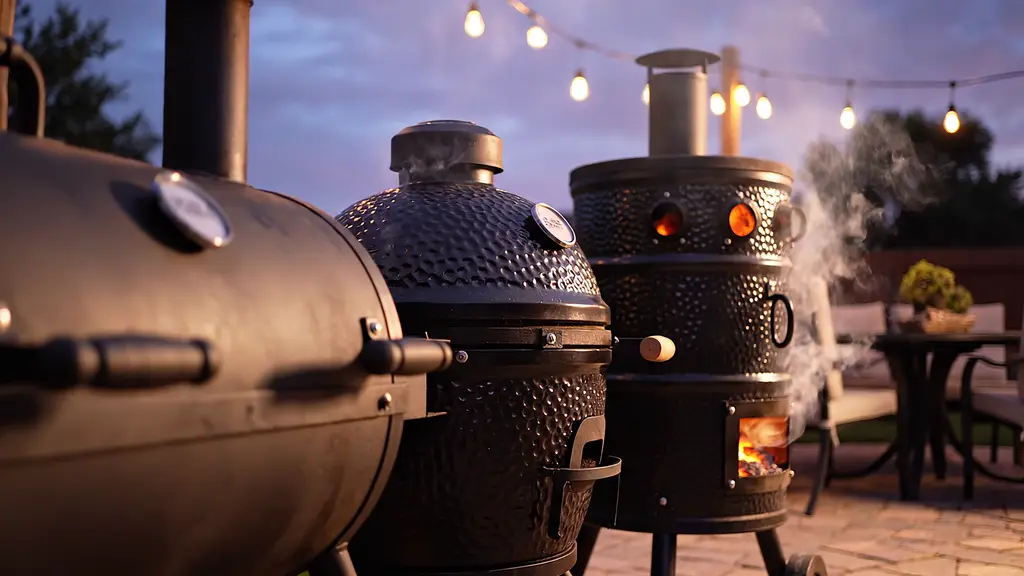
The right smoker is the one you’ll actually use. Before getting drawn into brand debates, decide how often you cook, how much hands-on fire management you enjoy, what fuel is readily available, and how much space you have.
There is no objective 10/10 smoke flavor rating that applies to every cook. Fuel quality, airflow, meat, weather, and technique all affect the result. Use the comparison below as a decision framework, not a lab-tested ranking.
The six common smoker types
1. Offset smoker
A separate firebox sends heat and smoke through a horizontal cooking chamber. Many traditional offsets burn seasoned hardwood splits. They’re rewarding for cooks who enjoy tending a live fire and can manage fuel changes throughout a long cook.
- Best for: Hands-on cooks and larger batches.
- Strengths: Direct control over wood fire and smoke character; potentially generous cooking area.
- Trade-offs: More tending, weather sensitivity, and a learning curve. Thin, inexpensive offset models may leak heat or struggle to draft cleanly.

2. Charcoal kettle
A kettle grill can smoke using a banked-coal setup, charcoal baskets, or a carefully arranged slow-burning fuel pattern. It is also useful for direct grilling, which makes it a flexible first outdoor cooker.
- Best for: New smokers and households with limited space.
- Strengths: Versatility, relatively simple mechanics, and easy access to charcoal.
- Trade-offs: Smaller capacity and some temperature management on long cooks.

3. Kamado
A kamado uses a thick-walled ceramic or insulated body to retain heat. It burns charcoal efficiently and can handle low-and-slow smoking as well as high-temperature grilling when used properly.
- Best for: Cooks who want strong temperature stability and multiple cooking styles.
- Strengths: Fuel efficiency and good insulation.
- Trade-offs: High weight, potentially high price, and slow temperature recovery when the cooker gets too hot. Follow manufacturer guidance when opening a very hot kamado to avoid flashback.

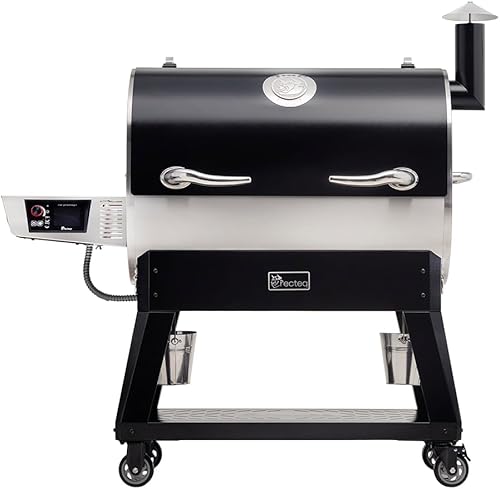
4. Pellet smoker
An electrically powered auger feeds food-grade hardwood pellets into a controlled fire. A temperature controller reduces some of the manual work, though it cannot eliminate equipment failures or the need for monitoring.
- Best for: Convenience-focused cooks and frequent weeknight use.
- Strengths: Easy temperature adjustment, repeatability, and broad cooking capacity on some models.
- Trade-offs: Power dependence, mechanical and electronic parts, and often a milder smoke profile than a well-managed wood fire.
5. Drum smoker
A vertical drum typically places food above a charcoal basket, sometimes with a heat deflector. It can be efficient and relatively straightforward once the intake airflow is tuned.
- Best for: Cooks seeking straightforward charcoal smoking and good capacity for the footprint.
- Strengths: Efficient use of fuel and compact vertical design.
- Trade-offs: Loading, access, and grease handling vary widely by model. Some drum setups expose food to direct radiant heat.

6. Bullet (vertical water smoker)
A bullet smoker stacks a charcoal bowl at the bottom, a water pan above the fire, and one or two cooking grates on top, inside a tall, round body with a side door for adding fuel. The best-known example is the Weber Smokey Mountain, sold in 14½-in., 18½-in., and 22-in. sizes. Unlike most drum smokers, the water pan sits between the fire and the food: it shields the meat from direct heat, and its mass helps hold the cooker steady at low-and-slow temperatures.


- Best for: Cooks who want a dedicated charcoal smoker that holds 225°F–275°F with little tending, especially on long overnight cooks.
- Strengths: Steady low temperatures, efficient charcoal use with the minion method, two levels of grate space, and a large community of owners sharing setups and fixes.
- Trade-offs: Little use for direct grilling, a water pan to refill and clean, and a side door that can leak air on some units. The lid thermometer reads the dome, not the grate, so add a grate-level probe. A full water pan can make high-heat cooking, like crisping chicken skin, harder; some owners run the pan dry or filled with sand for hotter cooks.
Buyer decision matrix
| Type | Hands-on work | Fuel/power | Space demand | Learning focus |
|---|---|---|---|---|
| Offset | High | Wood, sometimes charcoal | Usually high | Live-fire management |
| Kettle | Medium | Charcoal and wood chunks | Low | Vent control and two-zone cooking |
| Kamado | Low–medium | Charcoal and wood chunks | Medium; heavy | Temperature planning |
| Pellet | Low during stable operation | Pellets and electricity | Medium–high | Cleaning, controller, and probe use |
| Drum | Low–medium | Charcoal and wood chunks | Low–medium | Airflow and fuel loading |
| Bullet | Low | Charcoal and wood chunks | Low | Vent control and water-pan management |
Whatever you buy, the fire works the same way; fire management basics covers airflow, smoke, and fuel for every type.
Questions to ask before buying
- How much food will I cook? Estimate the number of racks, chickens, or briskets you need to fit—not just the manufacturer’s total square-inch rating.
- Can I tend the fire? An offset may need frequent attention. A pellet smoker simplifies temperature control but still requires supervision and maintenance.
- Where will it live? Measure the footprint, lid clearance, storage, and safe distance from structures or combustible materials.
- What will ownership cost? Include fuel, power, replacement probes, cleaning, weather cover, and eventual repairs—not just the sticker price.
- Can I get support? Read the warranty, check for replacement parts, and confirm that the local retailer supports the model.
A practical first-smoker recommendation
If you’re unsure what style you’ll enjoy, a quality 22-in. charcoal kettle is a versatile place to learn fire and airflow without committing to a dedicated smoker. If you already know you want a dedicated charcoal smoker that runs low and slow with little attention, a bullet smoker like the 18½-in. Weber Smokey Mountain is a common next step. If you prefer less tending still, evaluate an appropriately sized pellet unit. Choose an offset because you like the craft of managing wood fire—not because someone claims it always produces better barbecue.