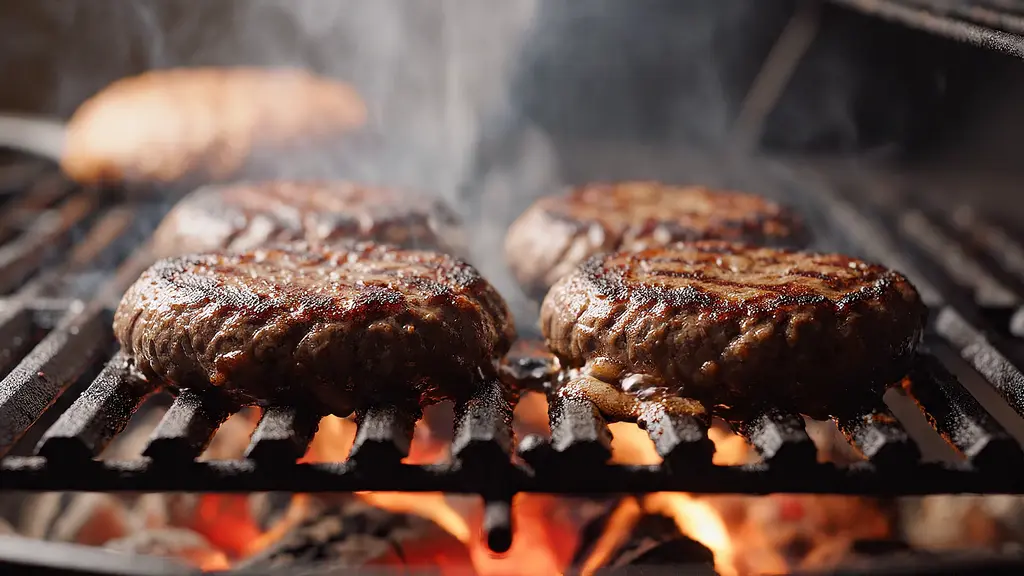
Direct heat delivers the smoky, savory crust people want from a backyard grill. It can also burn the outside before the center is safe to eat. The solution is not a stopwatch; it is heat control plus a food thermometer.
Keep this temperature chart handy
| Food | USDA minimum internal temperature |
|---|---|
| Ground beef, ground pork, pork sausage | 160°F |
| Chicken, turkey, and all other poultry | 165°F |
| Beef and pork steaks, chops, and roasts | 145°F, followed by a 3-minute rest |
| Leftovers | 165°F when reheated |
Measure in the thickest part. For thin burgers, insert a thermometer from the side toward the center. Avoid touching bone or metal. Color, clear juices, and grill marks do not reliably establish safety.
Burgers: Build a crust without guessing
- Preheat a clean grill for medium-high direct heat and keep a cooler zone available.
- Shape patties to an even thickness. Wash hands and sanitize utensils after handling raw ground beef.
- Place the patties over direct heat. Flip as needed for even browning; flipping more than once is fine.
- Move patties away from flare-ups. Check the centers and continue until they register 160°F.
- Put cooked burgers on a clean plate, not the plate that held raw meat.
Cooking time varies with patty size and grill temperature, so avoid treating “3 minutes per side” as a safety test.
Chicken: Cook through, then crisp
For bone-in thighs or drumsticks, start on indirect heat so the inside cooks without burning the skin. Shift to the direct side briefly for color and crispness. Chicken must reach 165°F at minimum; many cooks take thighs and drumsticks higher for a softer texture. Check multiple spots, avoiding bone.
For boneless breasts, reduce the heat and remove them only after the thickest part reaches 165°F. Do not rely on predicted carryover cooking to reach the minimum after removal.
Pork chops: Use the cooler side as insurance
Thicker chops benefit from an indirect start and direct finish. Verify 145°F before removal, then give the meat a 3-minute rest. A little pink can be normal in safely cooked pork; temperature is the reliable indicator.
If your grill isn’t set up with a cooler side yet, start with two-zone heat.
When flare-ups happen
Move food to the indirect zone with long tongs. Do not spray water onto burning grease. For a sustained fire, follow the manufacturer’s shutdown and emergency instructions if safe; move away and call 911 if it cannot be controlled. Do not reach across flames to turn valves.
Food safety beyond the grill: Keep raw meat cold until cooking, separate raw and cooked tools, and refrigerate perishables within 2 hours—within 1 hour if outdoor temperatures exceed 90°F.