Fuel affects heat management and smoke flavor, but choosing the right product is less about marketing labels than matching fuel size, burn behavior, and cooker design.
Charcoal: Lump versus briquettes
Lump charcoal consists of irregular pieces of carbonized wood. It can light quickly and produce relatively little ash, but small fragments may block airflow and different bags can behave differently.
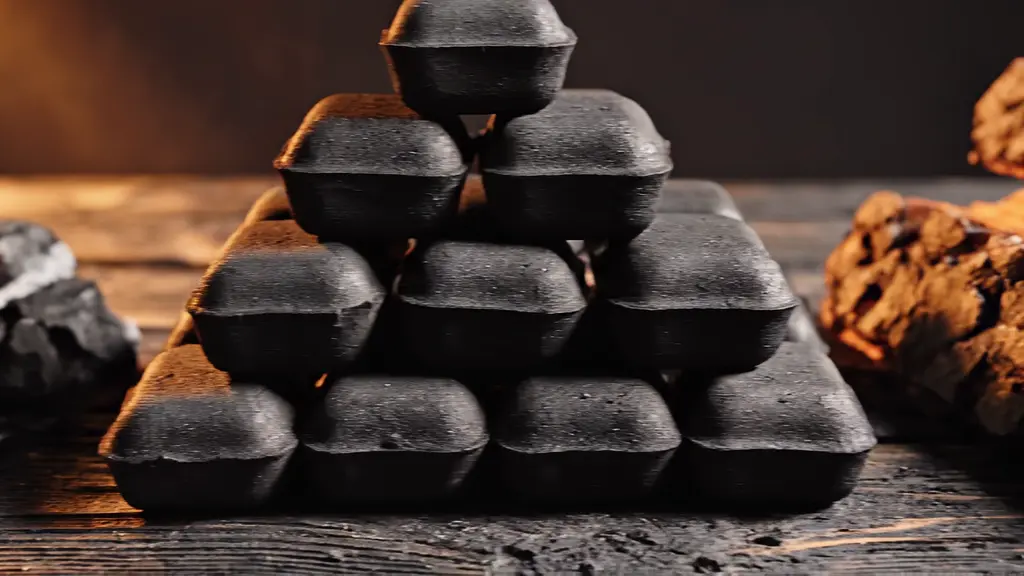
Briquettes are uniform compressed fuel pieces. Their consistent shape helps when arranging a controlled fire, especially in a kettle or drum. They generally produce more ash than many lump charcoals, though the difference depends on the product.
Avoid absolute rules about which is hotter or lasts longer. That outcome changes with brand, airflow, fuel load, and the cooker itself.


Match the wood to your smoker
| Wood format | Common use | Practical note |
|---|---|---|
| Pellets | Pellet grills | Use food-grade pellets approved for your unit; never burn pellets of unknown composition |
| Chips | Some electric or gas smoker boxes | Burn quickly; follow the appliance’s loading instructions |
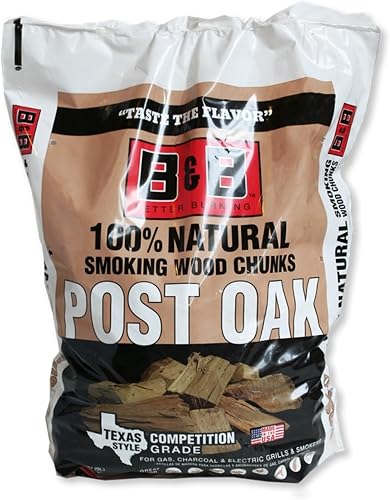
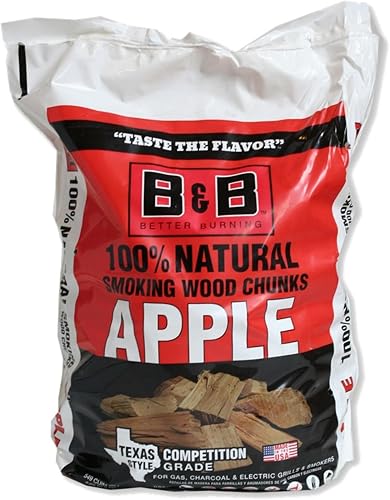
| Chunks, about 2–3 in. | Kettles, kamados, charcoal drums | Add a little at a time for controllable smoke |
| Splits, sized for the firebox | Offset smokers | Build a clean-burning fire with dry, seasoned wood |
Safety: Use clean, untreated, food-appropriate hardwoods and fruitwoods. Avoid pressure-treated or painted wood, construction scraps, plywood, unknown pallets, and resin-heavy softwoods. Never burn fuel indoors or in an unventilated garage.
Flavor starting points
| Wood | Typical flavor tendency | Where to start |
|---|---|---|
| Apple or cherry | Often mild and slightly sweet | Chicken and pork |
| Pecan | Moderate, nutty impression | Ribs and poultry |
| Oak | Balanced, traditional BBQ flavor | Brisket and beef |
| Hickory | Pronounced smoky character | Pork shoulder and ribs |
| Mesquite | Distinctive, assertive flavor | Short, hot cooks or small blends |
These are tasting tendencies, not chemistry guarantees. Amount, fire cleanliness, and meat seasoning can matter as much as the species.

Three buying checks
- Choose fuel for your cooker. A pellet grill needs approved pellets, while an offset typically benefits from seasoned splits.
- Inspect for consistency. An entire charcoal bag of dust or damp wood makes fire control harder.
- Prioritize clean combustion. Thick, acrid smoke often comes from a struggling fire. Improve airflow and fuel management instead of simply adding more wood. Fire management basics explains how to read the smoke.
Beginner recommendation: A kettle grill, quality briquettes, and a small amount of oak or fruitwood offer a straightforward learning platform. Keep notes about the fuel, weather, and temperature behavior so your next cook is easier.