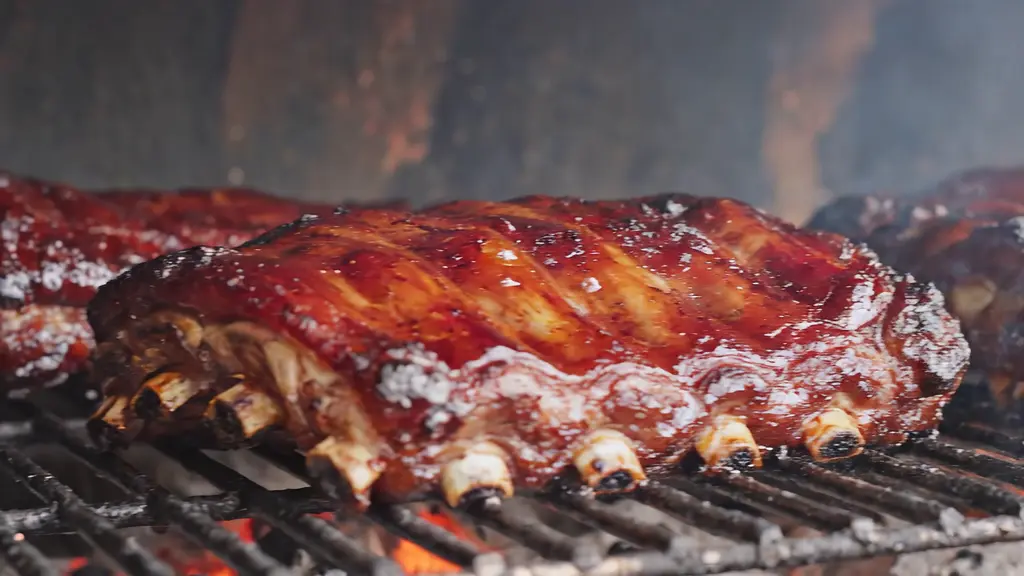
Recipe at a glance
- Makes
- 2 racks, about 4–6 servings
- Prep
- 20 min
- Cook, roughly
- 4 hr 30 min
Ingredients
- 2 racks pork ribs (baby back or St. Louis-cut spare ribs)
- 2 tbsp. kosher salt, adjusted for rack size and salt type
- 2 tbsp. coarse black pepper
- 2 tbsp. paprika
- 2 tbsp. brown sugar (optional)
- 1 tsp. garlic powder
- Optional: ½ cup BBQ sauce for glazing
Method
- Prep. Remove any loose membrane on the bone side, pat the meat dry, season evenly, and refrigerate until ready to cook.
- Smoke. Run the smoker at about 250°F–275°F and place the ribs bone-side down over indirect heat until the bark is dark and set, often 2–3 hours.
- Wrap if you like. For softer ribs, wrap in foil or butcher paper for 30–90 minutes, checking often. For firmer bark, keep cooking unwrapped.
- Glaze. Unwrap carefully, return the ribs to indirect heat, and brush on a thin coat of sauce during the final 10–20 minutes, just until it sets.
- Test and serve. The rack should bend and crack at the surface when lifted, and a toothpick should slide between the bones easily. Rest briefly, then cut between the bones.
Competition-style ribs are tender enough to leave a clean bite mark without falling apart when you lift the rack. You can make excellent versions from either St. Louis-cut spare ribs or baby backs, but they don’t cook on the same timeline.
Choose your rack
| Cut | Typical traits | Timing tendency |
|---|---|---|
| Baby back ribs | Shorter bones, curved rack, often meatier between bones | Often cook faster, especially thin racks |
| St. Louis-cut spare ribs | Flatter, more uniform rectangle; frequently more connective tissue and fat | Often take longer, but rack thickness matters |
Do not treat the common 3-2-1 formula as mandatory. Six hours can overcook many racks, especially baby backs. Watch tenderness and bark instead. Expect a cook of roughly 3–6 hours at 250°F–275°F, depending on cut and thickness.
Food safety: Whole pork cuts should reach at least 145°F, followed by a 3-minute rest; ribs are typically cooked much higher for texture.
Phase 1: Season and smoke
- Remove any loose membrane on the bone side if it hasn’t been trimmed by the butcher.
- Pat the meat dry and season evenly. Refrigerate until ready to cook.
- Run the smoker around 250°F–275°F. Place ribs bone-side down over indirect heat.
- Smoke until the rub has developed into a dark, set surface and the meat has begun to pull away from the bone tips. This may take 2–3 hours, but thickness and smoker temperature matter.
Phase 2: Decide whether to wrap
- No wrap: Keep cooking for a firmer bark. Lightly protect any spots that begin drying too quickly.
- Foil wrap: Add a small amount of liquid if desired, seal well, and cook for 30–90 minutes, checking frequently. Foil speeds tenderizing but softens bark.
- Butcher paper: Can protect the surface without trapping quite as much moisture as foil, but may still soften the crust.
For a bite-through competition-style rack, avoid leaving thin baby backs wrapped for two full hours without checking.
Phase 3: Set the glaze
Remove any wrap carefully; hot steam can burn. Return ribs to the grill over indirect heat. Brush on a thin coat of sauce during the final 10–20 minutes, just until glossy and set. Keep sugary glaze away from open flames. For a homemade sauce, try the Kansas City-style recipe in house BBQ rubs and regional sauces.
How to tell when they’re done
- Bend test: Lift a rack near one end. It should droop and may show small cracks in the bark, but it should not collapse into pieces.
- Probe test: A toothpick or thin skewer should slide between the bones with little resistance.
- Temperature: Many tender racks finish around 195°F–205°F, but bones, fat, and probe placement make ribs hard to measure consistently. Use temperature as context and feel as the final texture check, after the food-safety minimum has been met.
Rest briefly, cut between the bones, and serve. If they’re falling apart, shorten the wrapped stage next time; if they’re tough, give them more gentle cooking time.