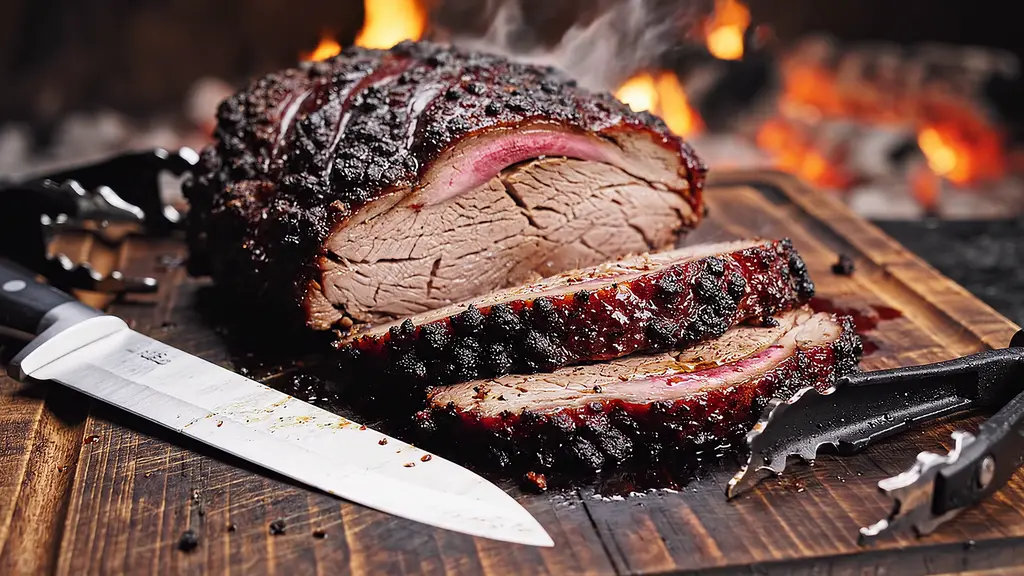
A clean brisket slice starts with a sharp knife. But barbecue prep and finished-meat carving call for different blade shapes, and most backyard cooks don’t need a case full of specialty steel.
The three tools worth understanding
| Tool | Best task | What to look for |
|---|---|---|
| 5–6 in. boning knife | Trim raw fat and silver skin | Narrow blade, secure handle, controlled flexibility |
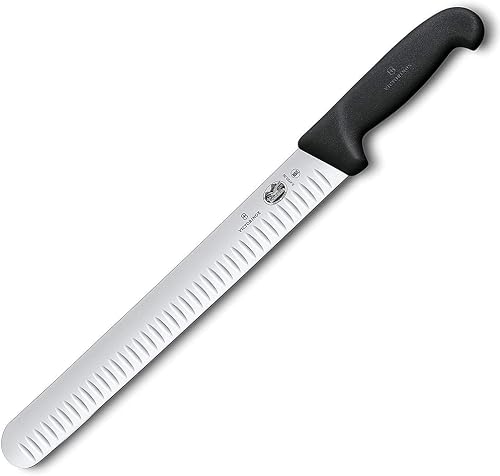
| 10–12 in. slicing knife | Cut cooked brisket, turkey, and roasts | Long, thin, sharp blade that can finish each slice in a smooth pass |
| Two forks or meat claws | Pull cooked pork shoulder | Easy-to-clean design that keeps hands clear of hot food |
Boning knife: For the raw work
A boning knife helps separate silver skin, remove hard fat deposits, and shape a brisket before seasoning. A flexible version works well around curves; a stiffer blade can offer better control for heavy trimming. Choose based on the job, not a universal “best” designation.
Technique: Keep the meat cold, work on a stable cutting board, and cut away from your supporting hand. Remove hard, waxy fat and ragged edges, but don’t trim away every bit of exterior fat.

Slicing knife: For the finished cook
A long slicer cuts across a brisket flat in one controlled pass, reducing tearing. Some models have hollow-ground or Granton-style scallops designed to reduce sticking; performance depends on the blade, food, and technique, so the dimples are not essential.
Technique: Identify grain direction before cooking if possible. When the meat is ready, cut across the grain and keep slices about ¼ in. thick as a starting point. Adjust for tenderness. The brisket weekend guide walks through slicing the flat and point.
Meat claws: Convenient, not mandatory
Two sturdy forks work for small batches. Meat claws are faster for large shoulders, but they can shred pork too finely if you overwork it. Keep some larger pieces for better texture.

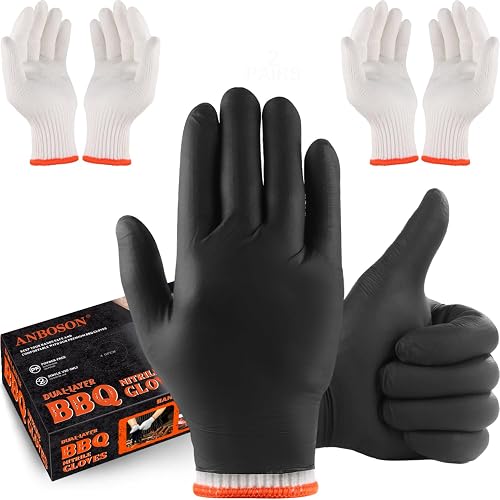
Some cooks use food-safe gloves over insulated liners for warm meat. Do not handle scalding meat with thin nitrile gloves or assume cotton liners are heatproof. Let the pork cool enough to handle safely, and use tools when it is too hot.
Maintenance and food safety
- Keep knives sharp, dry, and protected in storage.
- Use separate boards and utensils for raw and cooked meat, or thoroughly wash and sanitize between tasks.
- Wash knife handles and blades promptly; don’t leave them loose in a sink.
- Never try to catch a dropped knife.
Start simple: A good chef’s knife, a basic boning knife, and a sharp slicer will handle nearly every backyard BBQ job. Buy premium tools only after you know what bothers you about the ones you already own.


